
Search has evolved.
Most brands are optimizing for yesterday's search while tomorrow's search is happening right now. While you're focused on climbing Google rankings, AI engines are deciding who gets cited as the trusted source. To be everywhere your audience looks for answers, you need to master three distinct optimization strategies: SEO (Search Engine Optimization), AEO (Answer Engine Optimization), and GEO (Generative Engine Optimization). Here's what each one does and how to use them together.
Why all three matter: The future of search
- SEO helps your site show up in traditional search results—the foundation.
- AEO gets your brand featured in instant answers—think voice search and AI summaries.
- GEO puts your insights in generative AI results, where platforms like ChatGPT and Google Gemini synthesize answers from trusted sources.
Each is essential for discoverability, AI-citation, and credibility in a world of voice, chat, and AI-powered search.
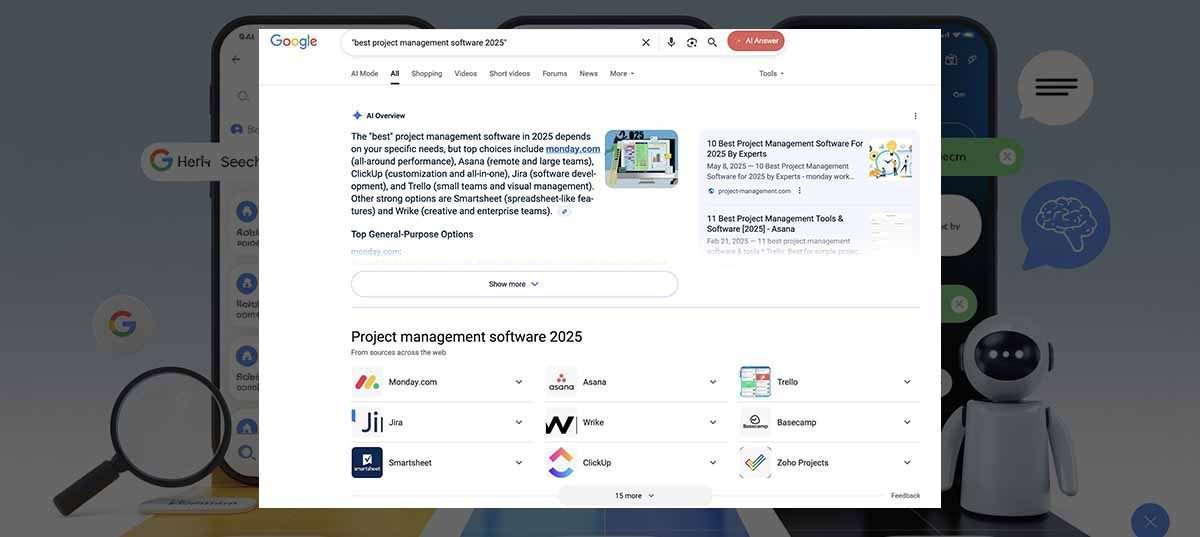
Google search results for “best project management software 2025,” showing an AI Overview (AEO) summary alongside traditional SEO listings.
2025 SEO Best Practices
- Publish Quality, Deep-Dive Content: Aim for 1,500+ words per key topic, covering user intent with comprehensive analysis and useful media. Example: An in-depth guide on “Mirrorless Cameras vs. DSLRs” with data comparisons, images, and hands-on tips.
- Optimize for Mobile and Speed: Use responsive design and tools like PageSpeed Insights for faster page loads. Example: Run a regular audit; compress images and streamline code for mobile visitors.
- E-E-A-T First: Author bios, expert citations, and proper referencing build trust. Example: List author credentials, cite academic papers, and show reviews.
- Structured Data Everywhere: Add FAQ, Article, and Product schema using JSON-LD to win rich results. Example: Use FAQPage markup for common questions.
- Build Authoritative Backlinks: Collaborate with industry leaders, guest post, and earn links from reputable sources. Example: Guest blog for a respected tech outlet to boost site authority.
2025 AEO Best Practices
- Format Content as Q&A: Break key topics into questions with succinct answers (1-2 sentences). Example: “What is AEO?” → “AEO means optimizing content to be selected for direct answers by AI engines and voice assistants.”
- Leverage FAQ and How-To Schema: Mark up all relevant sections to help search engines identify answers. Example: Add FAQ schema for product specs, delivery times, or troubleshooting questions.
- Use Conversational Language: Write naturally, targeting the way users speak to voice assistants. Example: “Which camera is best for night photography?” followed by a conversational 1-2 sentence answer.
- Update Content Regularly: Keep facts and recommendations current, refreshing every few months for accuracy. Example: Revisit best-of lists and update for new models or features.
- Authority and Voice: Be recognized—reference reputable sources and update business profiles for AI answer engines. Example: Ensure Google Business Profile and NAP info is consistent and up to date.
2025 GEO Best Practices
- Start with Direct Answers: Structure every section to begin with a clear answer to key user questions. Example: “How does GEO differ from AEO?” → Lead with the core difference before elaborating.
- Target Entities and Knowledge Graphs: Explicitly reference recognized product, company, and person names. Example: Use full product titles (“Sony A7 IV camera”) and link to the official sites.
- Semantic Depth & Structure: Go beyond keywords; use natural, multi-layered explanations suited for AI training. Example: Provide a concise summary, followed by in-depth, well-sourced context.
- Rich Multimedia with Metadata: Support written answers with images, videos, and context-rich alt text. Example: Include a branded image with descriptive captions and proper schema markup.
- Leverage Schema Beyond FAQ: Employ How-To, Organization, Person, and Product schemas for entity clarity. Example: Mark up a team’s bios and product tutorials using person and how-to schema.
- Track AI-Driven Visibility: Use tools that report on citations and mentions in AI platforms. Example: Tag and monitor generative traffic sources in web analytics and CRM dashboards.
Putting it all together: The 2025 Playbook
Combine these strategies for holistic search dominance:
- SEO gets traffic via rankings.
- AEO captures instant answers and voice queries.
- GEO ensures your expertise is cited and trusted by the latest AI engines.
By layering answer-first content, schema-rich markup, high authority signals, and relentless updates, you’ll maximize visibility in every AI-powered corner of the web.
Ready for the new era? The brands that blend SEO, AEO, and GEO in 2025 won’t just rank—they’ll be seen, cited, and recommended by humans, search engines, and AI assistants alike.
For more information
- Google Search Central - The official source for how Google actually works, including their latest AI Overview guidelines
- Schema.org - Essential for structured data markup that feeds both AEO and GEO strategies
- Search Engine Land - Best industry publication for staying current on AI search changes and case studies
- Google Search Console - Free tool everyone needs for measuring SEO performance and understanding how Google sees their content
- BrightEdge, Conductor, or similar AI visibility tracking platform - Some of the few tools actually measuring citations in AI-generated results
0 Comments