
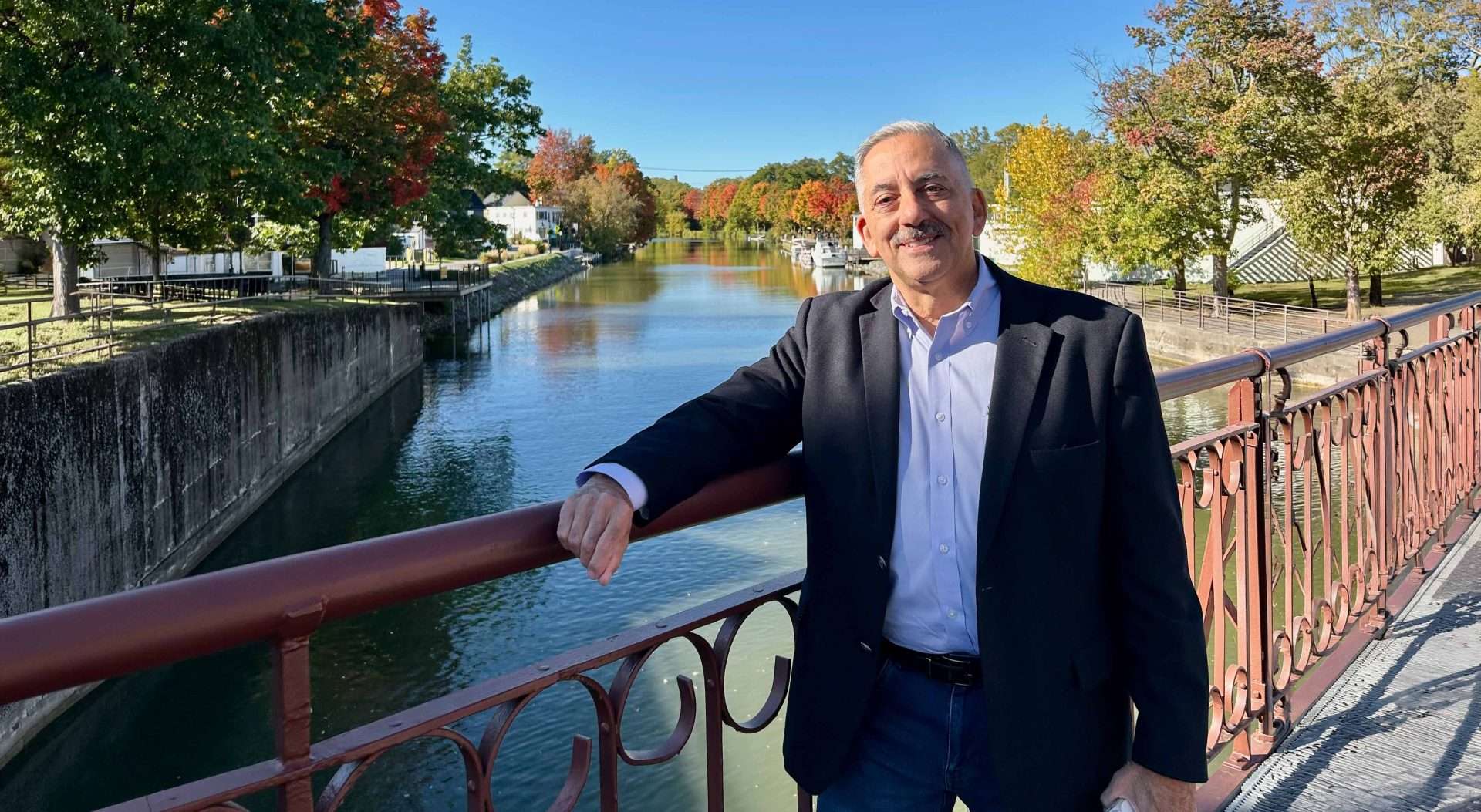
2025 - Fairport Lift Bridge on Main Street in Fairport, NY.
Recently, out of curiosity, I found myself wondering: just how bad were my high school grades? I turned out okay, so maybe they weren't as lousy as I remembered. So I called the Fairport High School Guidance Office and requested my transcript, half-expecting to learn the records had been tossed decades ago. A few hours later, an email arrived with the transcript attached. What I found was very interesting.
I'd never actually seen my entire transcript before. I remembered the grades—they were indeed mostly poor. But the standardized test scores stopped me cold. The IQ and aptitude numbers suggested I was destined for big things. On paper, the potential was undeniable.
I sat with those numbers for a while. I don't remember anyone ever telling me about them. Would I have turned out different if someone had said, "Your test scores show you as gifted. You have a lot of potential!" I'm not sure. But I wish I had known.
Maybe I would have tried harder earlier. Instead, in the classroom, I was a study in contradictions: a "classic underachiever," a kid with a high-performance engine I hadn't yet learned how to steer.
The Streetlight Scholar
I wasn’t a bad student in the sense that I lacked curiosity. I was actually a voracious reader. I spent my high school years working my way through the stacks of the Fairport Public Library, often staying up late to read by the glow of the streetlight outside my bedroom window.
The irony? I rarely, if ever, did the actual schoolwork I was assigned. I'd much rather play basketball—but that's another story. I was confident in my own smarts—confident enough to do only the bare minimum, relying on raw ability to pass. But confidence isn't maturity. I wasn't using my gifts: I was coasting on them.
The Power of High Expectations
There was one major exception to my "average" performance: mathematics. I maintained a 91.0 average over four years. That wasn't an accident. My 9th-grade Algebra teacher, Mr. Barry Thorne, saw past the act.
He didn’t just hope I’d do well. He told me flat-out that he expected me to be an “A” student. He even told me he expected me to score a 100% on the New York State Regents final exam. Because someone I respected finally set the bar high and took a genuine interest in my potential, I put in the effort. I got that 100%. It proved that I could perform at an elite level—if I had the right motivation. I wish I had thanked Mr. Thorne.

The Professional Convergence: Kodak to Buffalo
Despite earning 100% in math, I left Fairport with a cumulative average of only 79.1. I spent a year working before starting college. I wasn't ready. But the reset shifted my perspective. Once I started my higher education, something clicked: if I actually did the work, I was an A student. Imagine that. I graduated with high honors.
 In 1978, I began my career as a systems analyst at Eastman Kodak in Rochester. My "math-mind" was a perfect fit for working on IBM minicomputer systems internationally. After eight years at Kodak, I moved to Buffalo, where I spotted an opportunity and ran with it—I helped start a digital advertising agency and, in 1989, formed my own consulting company, Beato Enterprises Inc. During that transition period, a second "mind" didn't replace the first—it joined it: the communication-mind.
I spent the next 35 years consulting on emerging tech and building professional websites. It was a career that demanded both the logic of a systems analyst and the skills of a communicator.
Over that time, I came to understand something about myself: I was a self-taught learner at heart—an autodidact. Yes, I taught myself the professional skills I needed—design, teaching, digital strategy, etc. But my appetite for learning went far beyond work–to photography, history, religion, philosophy, health, human behavior, and the art of connecting with others.
A Pivot: Becoming a Wedding Officiant
Today, in semi-retirement, that lifetime of self-directed learning has taken an unplanned but fulfilling turn. I now serve as a wedding officiant. It is the ultimate merger of everything I've taught myself—the precision from mathematics to organize a ceremony, yes, but also the philosophy, the understanding of human behavior, and the art of connecting with others that I spent decades quietly acquiring.
Ironically, the student who could barely stay focused on an English assignment now spends his time carefully crafting the perfect words to capture the biggest moment in a couple's life.
The Full Circle
When I learned I'd been inducted into the Fairport High School Wall of Fame, my first reaction was to laugh. Somewhere in a filing cabinet, my transcript with a 79.1 average still existed. And yet here was the same school district celebrating my "academic excellence, professional achievement, and community service." In 2018, forty-five years after I walked out of Fairport High, I wasn't being honored for the student I was between 1969 and 1973. I was being recognized for the person I became when I finally used my gifts to their fullest. The long way around had led somewhere after all.
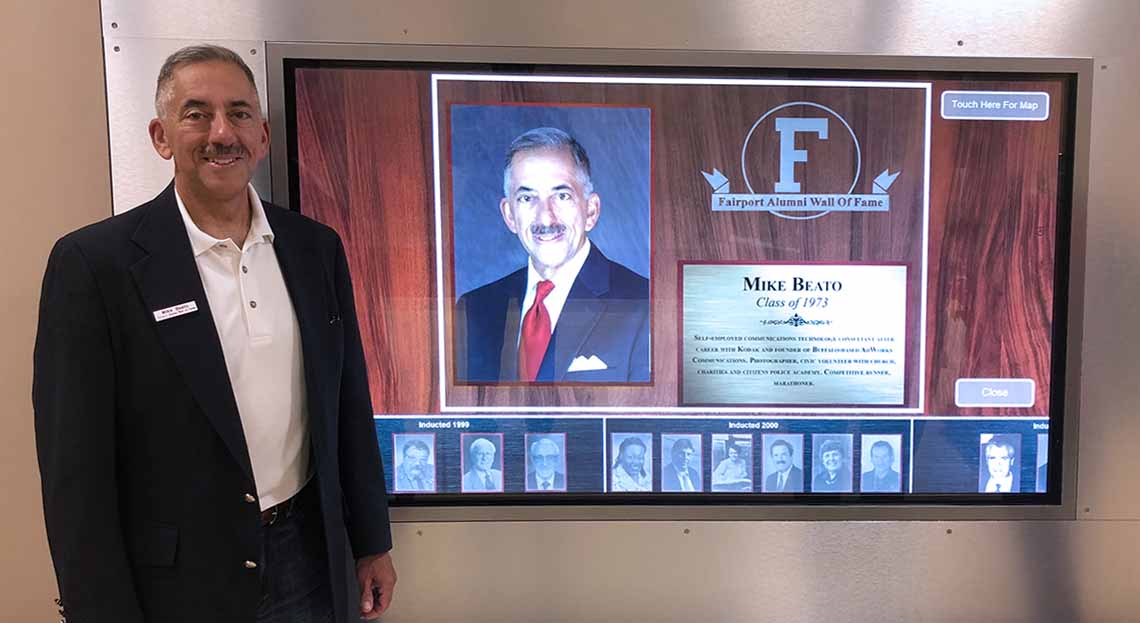
2018 - Fairport High School Alumni Wall of Fame
Key Takeaways for the Next Generation
- Potential is not a deadline: Being 'gifted' isn't a guarantee; it's a responsibility. If you're a slow starter, don't mistake it for a finished story.
- Find your “Mr. Thorne”: Seek out the people who set the bar high for you. Sometimes we need someone else to see our potential before we can see it ourselves.
- Become an Autodidact: Don’t wait for a syllabus. In today’s world, you have the ability to teach yourself anything you want to know.
- The “Long Way Around” is often the most interesting: Your high school grades don’t define your potential for success. Your curiosity and effort do.
- Express gratitude: If someone believed in you before you believed in yourself, don't wait to tell them.
Great story Mike! How does one end up on the Fairport Wall of Fame?
Great story Mike! Very inspirational. How does one end up on the Fairport Wall of Fame?
Hi Jay — Thanks for your feedback! The Wall of Fame process starts with a nomination. The alumni association sends a questionnaire, you fill it out and return it, and I believe the committee votes from there. I’m grateful. Fairport has produced a lot of impressive people doing meaningful work, so I’m honored to be included.