
Most business advice focuses on how to charge more for your professional services. This isn’t that kind of blog post. Instead, I’m going to explain why I sometimes choose to charge less—or nothing at all—and how I do it without devaluing my work.
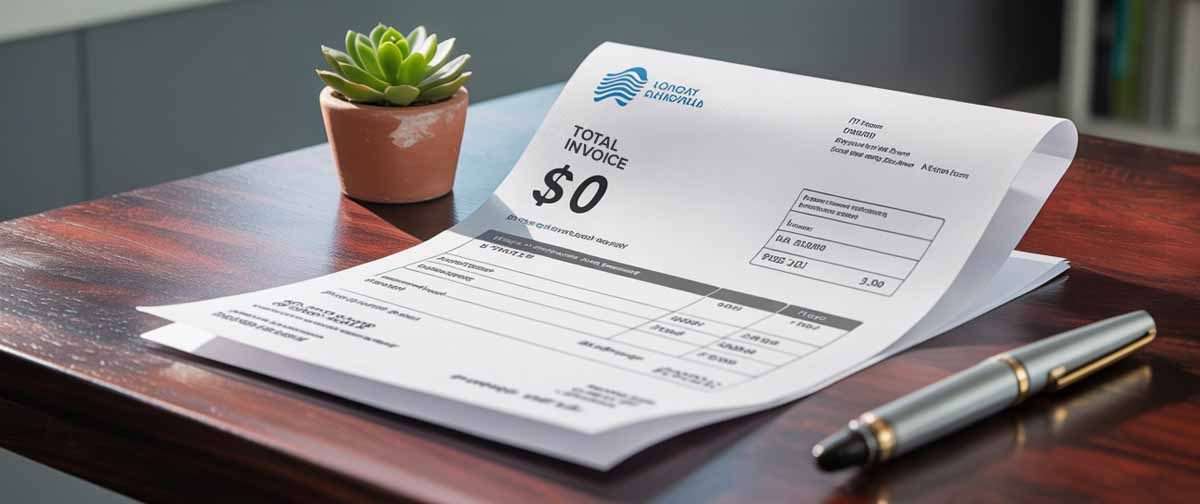
Last week, I spent two hours helping a startup founder with their website communications strategy. When the work was done, I sent him an invoice for $0.
It wasn’t a mistake. It was a courtesy invoice — a professional document showing the value of work I chose not to charge for.
When to offer professional courtesy discounts
I offer discounts or full waivers selectively:
-
For short advisory sessions with early-stage founders and startups
-
For pro bono work with worthy non-profits and charities
Why do I bother sending formal invoices for free work (or document the reduced charge)?
I don't always send invoices for free work. If I'm helping out a friend or doing a quick favor, I'll simply say "don't worry about it" or "I'm happy to help, no charge." But in professional contexts, particularly with businesses or organizations, I find it valuable to send a formal invoice for three key reasons:
- It documents the scope of work clearly
- It shows the market value of my services
- It maintains professional boundaries
If you just say “don’t worry about it” after doing free work, you risk creating unclear expectations. A proper invoice, even for $0, sends a clear message: this is professional work that normally costs money.
Setting the right expectations
When sending a courtesy invoice, I might include a brief note:
“I’ve included this invoice to document our work together. While I’ve added a courtesy discount, the rates shown are my standard professional fees.”
Or:
“I’m happy to support you in these early stages of your startup. This invoice shows my standard rates for reference, though I’ve applied a full courtesy discount for our initial work together. I believe in what you’re building and wish you good luck as you move forward.”
Or for a charity:
“I’m very pleased to support your mission with this initial consultation. I’ve applied a full courtesy discount this time, and I’ve included my standard rates to help with your future budget planning. The work you’re doing matters, and I’m glad to play a small part in it.”
These notes set clear expectations for any future engagements while acknowledging the current arrangement.
How to write professional courtesy invoices
I structure these invoices exactly like my regular ones, whether I’m offering a full or partial discount. Here are the key elements:
- Regular line items showing what I did and my standard rates
- A clear notation of the courtesy discount (e.g., “Professional Courtesy Credit”)
- A final total after the discount is applied
A key point here: I never lower my hourly rate. Instead, I add a courtesy credit at the end. This keeps my time valued appropriately while still giving me flexibility to extend discounts when it makes sense.
Why you shouldn't lower your standard hourly billing rate
I learned this lesson the hard way. Early in my career, I agreed to reduce my hourly rate in exchange for a client’s commitment to a minimum number of monthly hours. It seemed like a fair trade at the time: they’d get a lower rate, and I’d get guaranteed work.
But here’s what actually happened: The client quickly fell short of the promised hours, leaving me with reduced income and an awkward situation. This continued for a couple of months before I had to end the arrangement.
This experience taught me a valuable principle: never cut your hourly rate. Instead, if you want to offer a discount, maintain your standard rate and apply credits based on actual hours worked. It’s a subtle but crucial difference. When you reduce your rate upfront, you lose leverage. When you maintain your rate and offer credits based on performance, you create a self-enforcing system that protects both parties’ interests without requiring uncomfortable confrontations.
That’s why all my professional courtesy discounts appear as credits on the final invoice, never as reduced hourly rates. This approach maintains the true value of my work while still allowing me to extend courtesies when appropriate.
What a courtesy invoice looks like
Here are a few sample invoice line items:



What if a client insists on paying?
Sometimes, even when I want to provide my services entirely free of charge, a client might insist on paying something. In these cases, I'll suggest they consider making a donation to a charitable cause instead. This honors their desire to show appreciation for my time while keeping our professional relationship clear and maintaining the spirit of the courtesy arrangement. Everybody wins.
Why it matters
A zero-dollar invoice might seem like unnecessary paperwork. But it’s a good tool that transforms “doing someone a favor” into a proper professional engagement. It honors both the value of your work and the special nature of the arrangement.
Most importantly, it prevents any confusion about the value of your time. When you’re giving away your services, handle it with the same care as when you’re charging full price.
See also: Looking to maximize the value of your paid work? Read “250+ Action Verbs for Invoices That Earn Money” for strategies on writing invoices that get paid promptly and in full.
0 Comments