
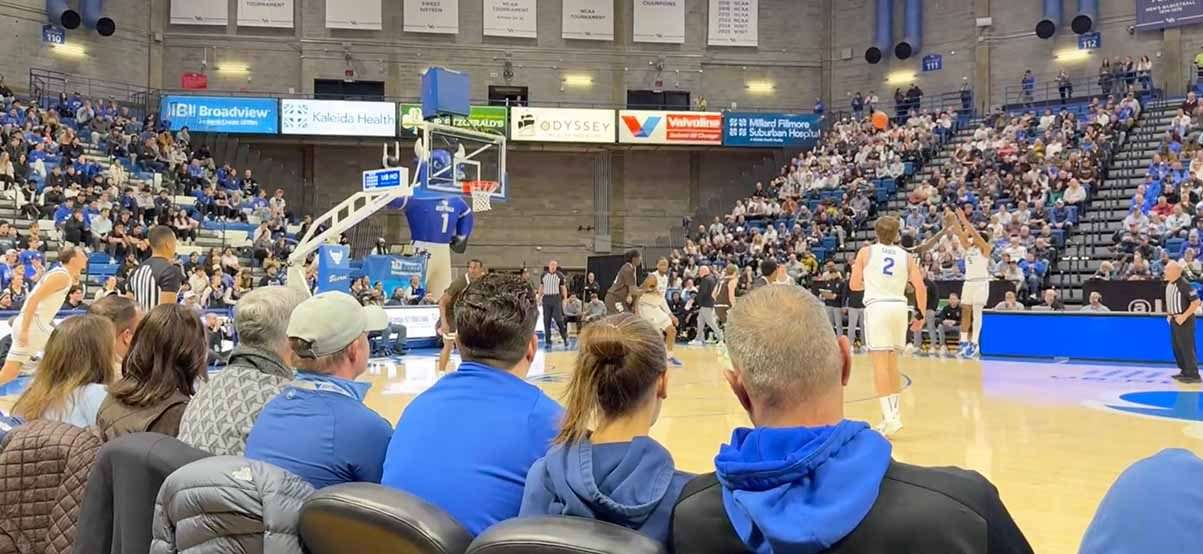
I was at a basketball game yesterday afternoon when I noticed something about all the players. Almost everyone on the court was right-handed—except one. Every time he took a shot, he used his left hand. He was left-handed.
It got me wondering: why is that ratio so lopsided?
Look down at your own hands.
If you're like roughly 90% of the human population, your right hand is a precision instrument. It signs checks, throws darts, and scrolls through your phone with ease.
Your left hand? It mostly plays a supporting role. It holds the jar while the right hand does the actual work of opening it.
This massive, lopsided preference is one of the strangest traits of humans. You don't see 90% of dogs exclusively shaking hands with their right paw. Most animals have an even split between lefties and righties.
So, why are humans so obsessively right-handed? It turns out, the answer isn't actually in your hands. It's in your head.
Here's how evolution, efficiency, and ancient warfare shaped how you hold a pencil today.
The Great Brain Takeover
To understand why you use your right hand, you have to understand a quirk of human biology: cross-wiring.
Your brain controls the opposite side of your body. The left hemisphere manages the right side, and the right hemisphere manages the left side.
Millions of years ago, as our ancestors started developing the complex ability to use language, the brain needed a dedicated headquarters for this massive processing task. For the vast majority of humans, language developed in the left hemisphere.
This is where efficiency kicked in. The left brain was already doing the heavy lifting for complex sequencing—putting words in the right order to form a sentence. When it came time to perform complex physical tasks, like using a flint tool or threading a bone needle, it just made sense for the "manager" (the left brain) to delegate that task to the side of the body it already directly controlled: the right hand.
This deep connection between speech and gesture suggests that you're not just right-handed; you're "left-brained" for skilled tasks, and your hand is following orders.
The Stone Age Assembly Line
Once biology provided a slight nudge toward right-handedness, social evolution locked it in.
Imagine a group of early humans teaching their young how to make a spear. Learning complex physical skills is much easier through imitation. If the teacher is right-handed, it helps if the student is too.
Cooperation was also essential for survival. If you're working in close quarters—butchering an animal or building a shelter—having everyone move in the same direction is safer and faster. A lone left-hander swinging an axe in a tight circle of right-handers risks an accidental amputation.
Over millennia, humanity created a feedback loop: Our brains leaned right, our tools were designed for the right, and our culture taught the right.
The Mystery of the Lefties
If being right-handed is so biologically efficient and socially advantageous, why do left-handed people still exist? Why didn't natural selection wipe out the remaining 10% eons ago?
Scientists believe the answer might lie in the "Fighting Hypothesis."
For thousands of years, human survival often depended on hand-to-hand combat. In a world dominated by right-handers, everyone learns to fight—and defend against—a right-handed opponent. You know where the punch is coming from; you know the angle of the sword swing.
Enter the left-hander.
Suddenly, the attacks are coming from unexpected angles. The stance is mirrored. The defensive rhythm is broken. In the ancient world, the left-hander had the ultimate element of surprise.
While handedness is a complex genetic trait involving over 40 different genes, this "southpaw advantage" (still seen today in boxing, fencing, and baseball) likely preserved the genetic cocktail for left-handedness. It wasn't enough to take over the population, but it was just enough of an edge to keep them in the gene pool, hovering steadily at about 10% for thousands of years.
A Relic in Your Pocket
We no longer need to fight with spears to survive, and we have scissors designed for lefties now. Yet, the overwhelming bias remains.
That left-handed player I watched yesterday? He's the latest in a long line of southpaws whose ancestors survived precisely because they were different. His unexpected angles aren't a quirk—they're an evolutionary inheritance, a faint echo of Stone Age combat still paying dividends on a basketball court.
Sources
“Left-handedness and Its Genetic Architecture.” Nature Human Behaviour, 2020, https://www.nature.com/articles/s41562-020-00956-y.
“Right Brain/Left Brain: Is It Right?” Harvard Health Blog, Harvard Medical School, 25 Aug. 2017, https://www.health.harvard.edu/blog/right-brainleft-brain-right-2017082512222.
Ghirlanda, Stefano, and Magnus Enquist. “Evolution of Handedness in Humans.” Proceedings of the Royal Society B: Biological Sciences, vol. 271, 2004, pp. 853–857. https://royalsocietypublishing.org/doi/10.1098/rspb.2004.2926.
Cuellar-Partida, G., et al. “Genome-Wide Association Study Identifies 48 Common Genetic Variants Associated with Handedness.” Brain, vol. 143, no. 10, 2020, pp. 2938–2951. https://pmc.ncbi.nlm.nih.gov/articles/PMC7116623/.
Sha, Zhaoning, et al. “Handedness, Its Genetic Influences and Associated Brain Asymmetries.” Nature Human Behaviour, vol. 5, 2021, pp. 59–70. https://pmc.ncbi.nlm.nih.gov/articles/PMC8617418/.
Pfeifer, Laura S., Jens Schmitz, and Clyde Francks. “Meta-Analysis of Handedness in Twins Reveals a Heritability of around 25%.” Psychological Medicine, vol. 52, no. 15, 2022, pp. 3471–3482. https://pmc.ncbi.nlm.nih.gov/articles/PMC8760823/.
Guadalupe, Tulio, et al. “Differences in Cerebral Cortical Anatomy of Left- and Right-Handers.” Frontiers in Psychology, vol. 5, 2014, article 261. https://www.frontiersin.org/articles/10.3389/fpsyg.2014.00261/full.
Wiberg, A., et al. “Left-Handedness Is Associated with Greater Functional Connectivity between Language Regions.” Brain, vol. 142, no. 10, 2019, pp. 2938–2951. https://academic.oup.com/brain/article/142/10/2938/5556832.
0 Comments