
Tech journalist Kevin Kelly once said, “The biggest lie we tell ourselves is, I don't need to write this down because I will remember it.”
He's right. And you already know it.
You already write things down to remember them. Birthdays and appointments go on your calendar. Grocery lists go on your phone. You'd never try to hold all that in your head—it would be exhausting and pointless.
So why do we treat our other thoughts differently?
Ideas, worries, half-formed plans, things we want to figure out—most people let these swirl around in their heads, taking up space. But your brain was built to be more than just a storage unit. It was built to think. To create. To solve problems and make decisions.
“Your mind is for having ideas, not holding them.”
― David Allen
Journaling isn't just about remembering. It's about clearing the runway for creativity. The practice is simple: regularly write down what's in your head—thoughts, experiences, interactions. Once they're on the page, they finally have somewhere to live.
What journaling actually does
I've been writing in a journal nearly every day for more than ten years—525,000+ words and counting. Here's what the practice has done for me:
Remembering people. When I meet someone new, I write down their name, where I met them, and a detail about them. When I run into someone I already know, I note the circumstances. It's a simple act that honors the people in my life by proving I cared enough to write them down. And because I journal digitally, I can search older entries to refresh my memory before reconnecting.
Clarity through writing. When I write, I'm forced to organize scattered thoughts into coherent ideas. I discover what I actually think by articulating it on the page. This is especially powerful at significant inflection points—before and after big events, and during uncertain times. Writing down what I'm thinking helps me cope with the anxiety caused by a chaotic world.
Capturing wisdom for my future self. My past self knows things my future self will forget. Hard-won lessons, reminders about what works for me, things I'll need to hear again when I'm in the thick of it. Writing them down is like leaving advice from someone who knows me better than anyone else ever will.
Refining my voice. My journal is a scratchpad—a place to draft emails, messages, posts. I workshop the wording until it feels right before sending it out into the world. The bonus: I keep a record of how I've communicated with others and what mattered enough to say.
Reading my own history. After more than ten years, my journal isn't just a place to write—it's a place to return to. I can see how I've changed, how I've handled setbacks, what mattered to me then versus what matters to me now. The writing compounds.
How to start journaling
You don't need a special system. You don't need a fancy notebook.
I use Scrivener—software designed for writers. Each day, I create a new text document, title it with the date, and record who I met, what we discussed, and what I did. Simple.
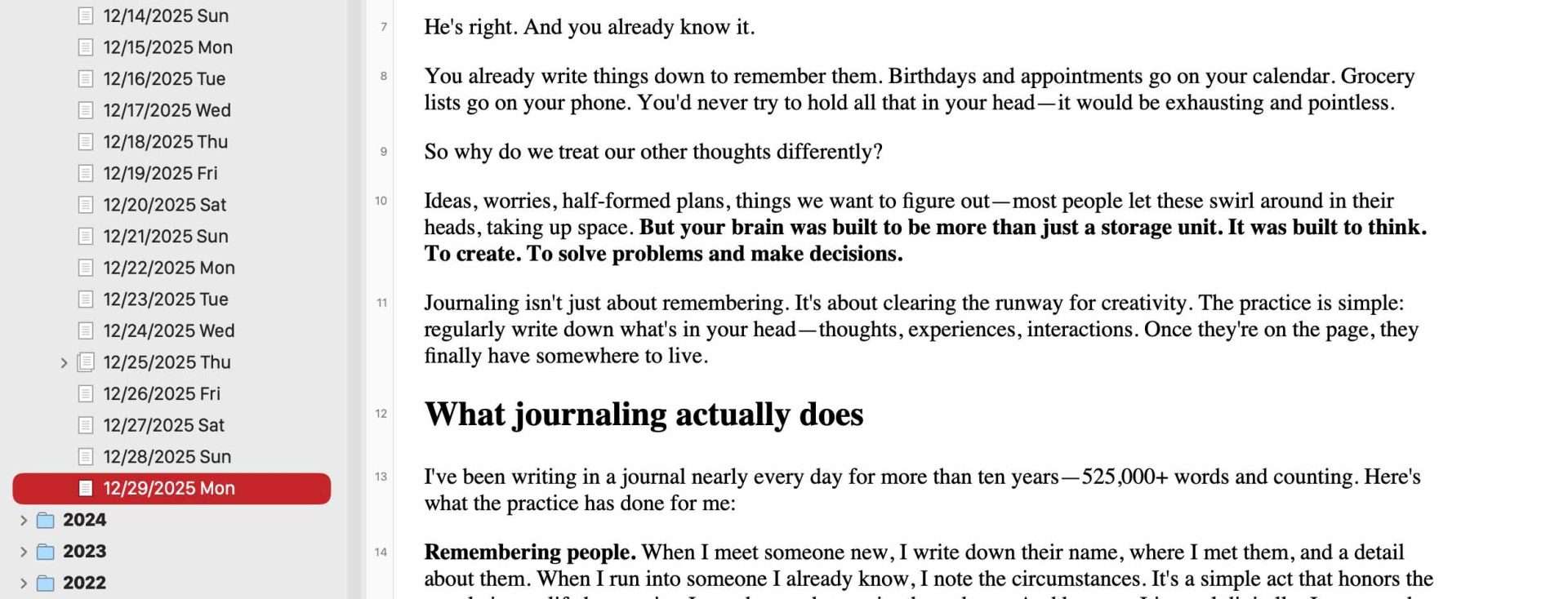
Scrivener app for journaling
But use whatever system works for you. The tool doesn't matter. Just write things down. Somewhere. Anywhere you can find it later.
Your brain wasn't built to store everything. It was built to think. To create. To decide. Give it the space to do that.
That’s the whole trick, and why I’ve journaled more than half a million words (and counting).
# # #
The low‑tech tools I reach for:
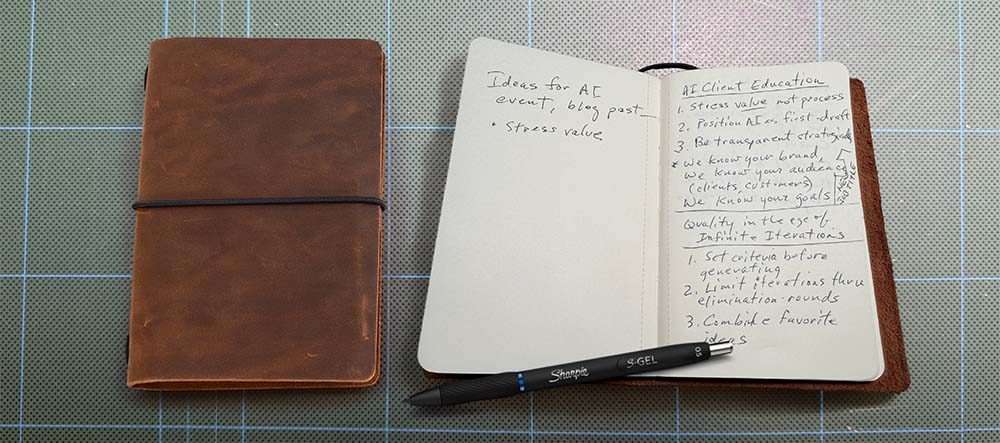
In addition to using the Scrivener app on my computer, I carry a small notebook with me when I'm away. I find it easier and more convenient than typing on my phone. Here are my favorite low-tech tools:
If you liked this, then you may also like:
- Why I Start My New Year’s Resolutions on December 1st as another habit/behavior post.
- 2025 Planning Guide for Freelancers is an example of journaling that feeds into planning.
- The 2025 Guide: Mastering SEO. Journaling is how I clear my mind so I can do deep work like this SEO guide.
0 Comments